Set the limits of autonomy
Relate what the agent can do to the competence students must build, the risk of the task and the human review actually available.
Fernando Santamaría · University handbook · 2026
A book about understanding, designing and governing AI agents without losing sight of what it means to learn.
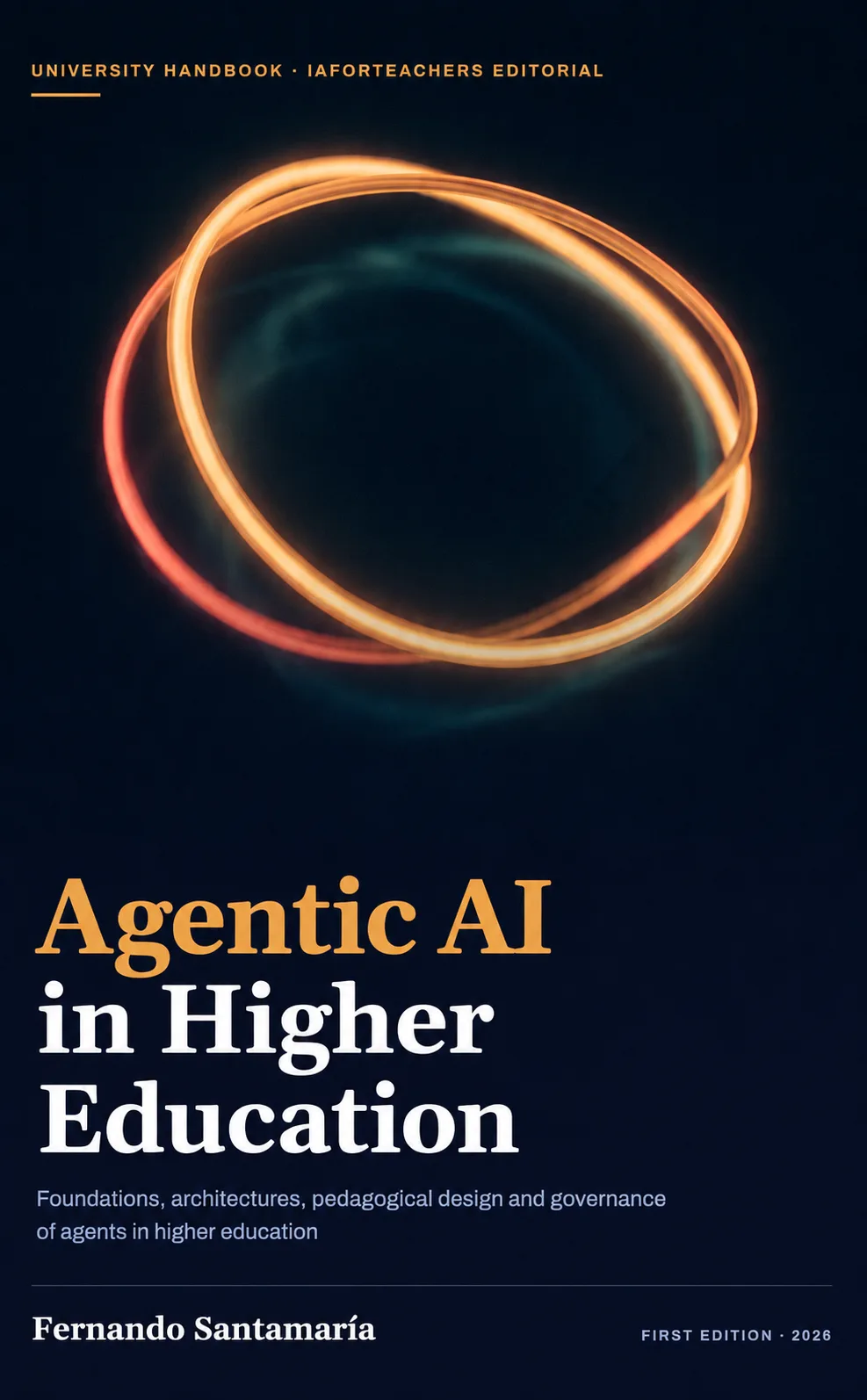
Agentic AI in Higher Education
Foundations, architectures, pedagogical design and governance of agents in higher education.
The question running through the book
A system’s operational autonomy and a learner’s agency are not the same thing. A tool’s ability to complete a task is not enough to decide whether it should do so in a learning activity.
The book connects technical architecture with concrete decisions: what support to offer, what effort to preserve, when to intervene and how to check whether students can explain and transfer what they have learned.
For university educators, learning designers, researchers and teams deciding how to bring AI into their institution.
Decisions the book helps you make
Relate what the agent can do to the competence students must build, the risk of the task and the human review actually available.
Separate technical feasibility from educational impact, place applications according to the available evidence and document why they are accepted or rejected.
Look beyond the submitted product through evidence of process, explanation, traceability and transfer without the agent’s support.
01 / Understand the system
An agent can organise a sequence of actions, use tools and review the results. Oversight needs to cover that process, not just the quality of its final answer.
Gather the relevant context.
Break a goal into steps.
Use authorised tools.
Check results and adjust course.
Results return to the context. The cycle continues or stops.
02 / Design before automating
Start with the learning activity. The autonomy framework proposes setting limits according to the learning goals, the students, the risks and the human review actually available.
What must the student not delegate?
What support do they need now?
What would happen if the agent were wrong?
Who can intervene, and how?
Together, these answers define the acceptable scope of autonomy.
03 / The central proposal
PRA (APR in the Spanish book) is not a race towards the highest level. It is a set of configurations for matching support to context while protecting the cognitive work through which students learn.
Explicit instructions and direct supervision.
Initial support; teacher intervention in assessed work.
Adaptation and feedback with periodic review.
Pathways within defined parameters, alerts and safeguards.
A narrow domain, traceability and accessible human review.
More autonomy does not mean better learning. Level 4 is exceptional, not a target.
04 / Read the evidence carefully
The book distinguishes documented, emerging, plausible and speculative applications. This makes it possible to consider an application without confusing technical feasibility with educational impact.
Public evidence establishes the scope of the claim.
An observable implementation; evidence remains limited.
Technically feasible; educational impact still to be tested.
Depends on capabilities not yet reliably available.
Categories must be reviewed as the evidence changes.
A classroom situation · Hypothetical example
The student must formulate a thesis and defend it with evidence.
The agent can point out a gap in the argument and ask for a justification; it does not write the thesis for the student.
Afterwards, the student explains their decisions and tackles a related task without the agent’s support.
This activity illustrates a design decision. It is not presented as an experimental case or a guaranteed outcome.
The full map
From the concept of an agent to institutional responsibility. Open each part to see its chapters.
Also includes an index of figures. English headings on this website have been normalised for readability. Pagination may change with editorial revisions.
Included with the book
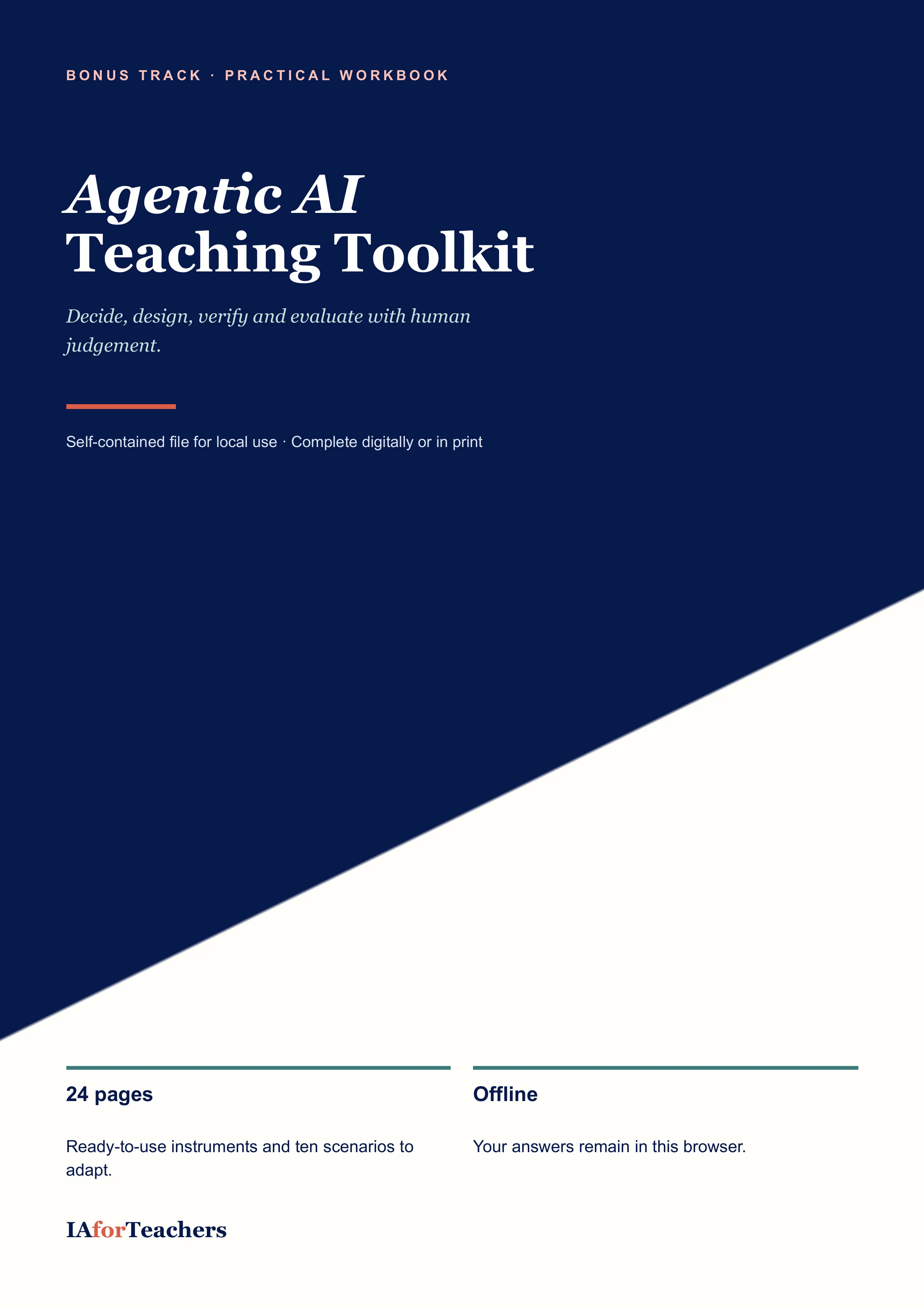
The Agentic AI Teaching Toolkit accompanies the handbook with instruments for preparing, documenting and reviewing an educational activity. It is a workbook, not an AI application.
The HTML works offline. Do not enter students’ personal data, and keep copies of your responses; browser storage is not a substitute for a backup.
Free reading · No sign-up
The complete first chapter is available in both languages. Open it in your browser or download the PDF and read it at your own pace.
The English sample includes the cover and complete preliminaries. The Spanish sample also includes section 2.6.
Free sample in English
Cover, complete preliminaries and Chapter 1 in full, including its figures and references.
Muestra gratuita en español
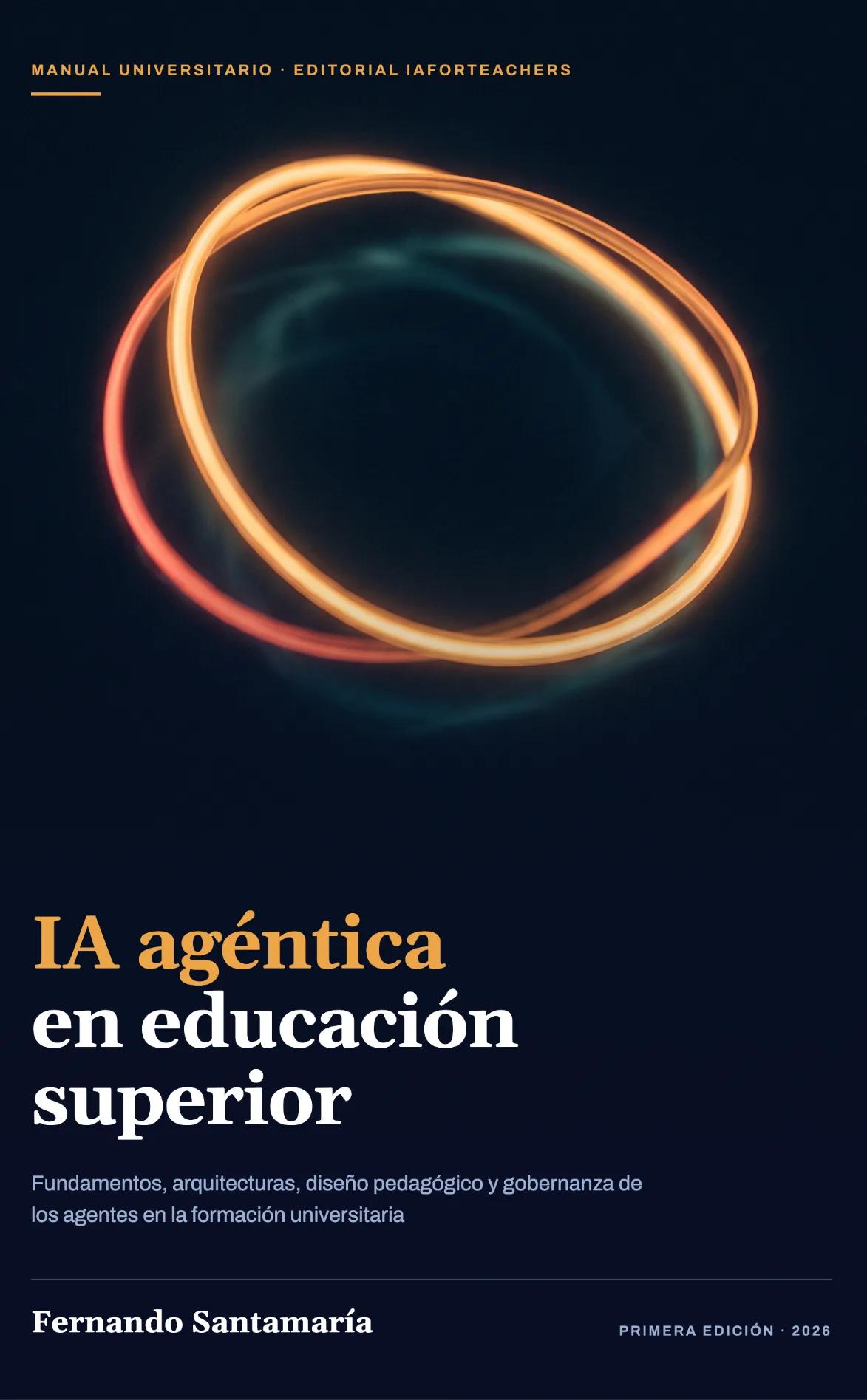
Preliminares, capítulo 1 íntegro y la distinción central entre autonomía operativa y agencia epistémica.
Also available
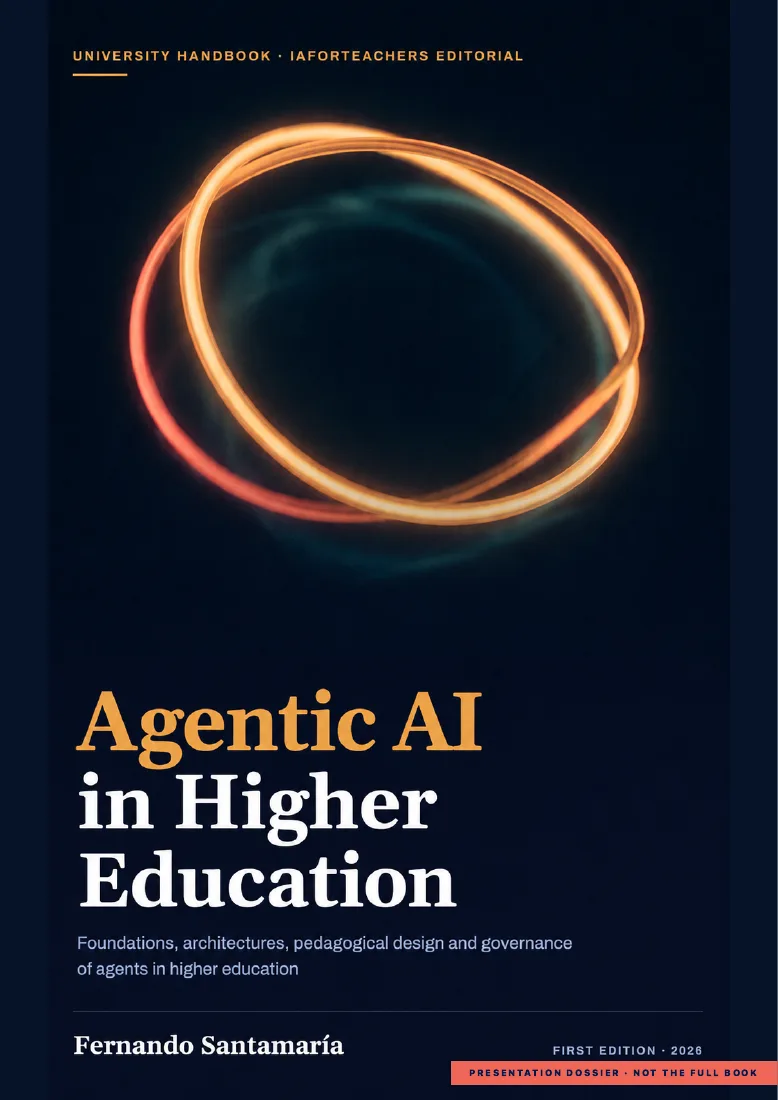
A concise overview of the principal frameworks and full contents, intended for editorial assessment, libraries and reviewers.
For departments, libraries and teaching units
Ask directly about possible arrangements for a working group, internal development programme or library. Availability and scope are agreed case by case; this page does not promise a fixed institutional package.
Ask the author ↗Not to follow the pedagogical argument. The book explains components and architectures; it is not a programming course or a catalogue of prompts to copy.
Each link leads to its own edition: English or Spanish. This website brings both together, but a purchase does not automatically include both languages. Check the contents and final price on Payhip.
The book and teaching toolkit are offered in PDF and HTML for local reading. Check the Payhip listing for the files included in the edition you intend to buy.
The handbook combines references, case analysis and the author’s own proposals. It distinguishes application maturity and states the limits of its frameworks. A pedagogical proposal is not, on its own, a validated intervention.
The standalone HTML and PDF files are intended for local reading. Opening source links or accessing external services does require an internet connection.
It is published, with textual revisions planned over the coming weeks. The English edition is still undergoing language review. Content and pagination may change; academic citations should identify the version consulted.
The book + the teaching toolkit
Choose your reading language. Each edition’s price and included files are shown on Payhip before purchase.
English edition
Language and editorial review in progress · PDF and offline HTML
View English edition ↗Editorial transparency. Textual corrections and amendments are planned over the coming weeks. In particular, the English edition is still undergoing language and copy-editing review; some corrections may change pagination. Before citing or reviewing, please request the latest revision.